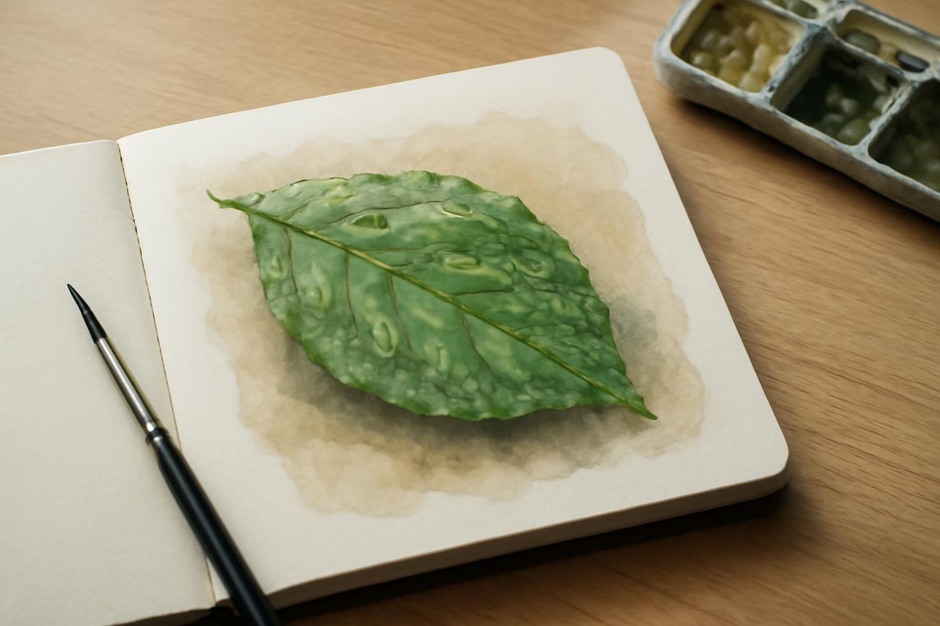
Wet and Dry: Texture Studies in Moisture and Light
The visual effect of water and light
Moisture alters both colour and texture: wet leaves darken, surfaces gain sheen, and contrasts often soften. Light direction interacts with wetness to produce specular highlights or deepened shadows. Noting these relationships makes texture studies more informative and useful for later reference.
What to look for
When you approach a wet surface, consider:
- Value shift: does wetness make the surface darker or lighter?
- Specularity: are there sharp highlights or broad reflections?
- Edge clarity: does wetness blur or accentuate edges?
- Colour saturation: are pigments intensified or muted?
Exercises
Work in short, focused sessions. Each exercise is designed to be completed in 20–30 minutes.
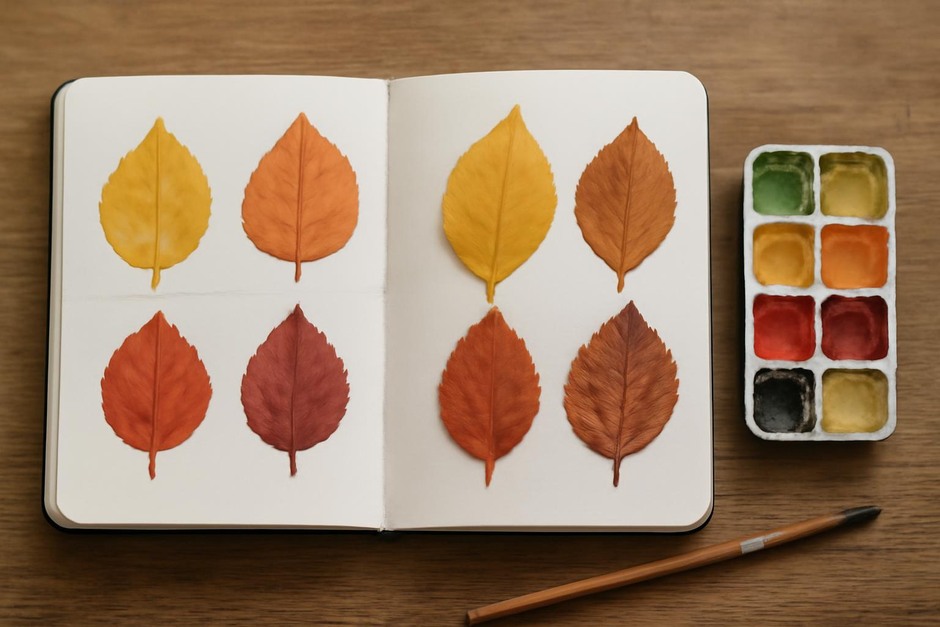
- Wet leaf comparison: Find the same species of leaf, one wet and one dry. Make side-by-side sketches and colour notes. Notice how veins and translucency change.
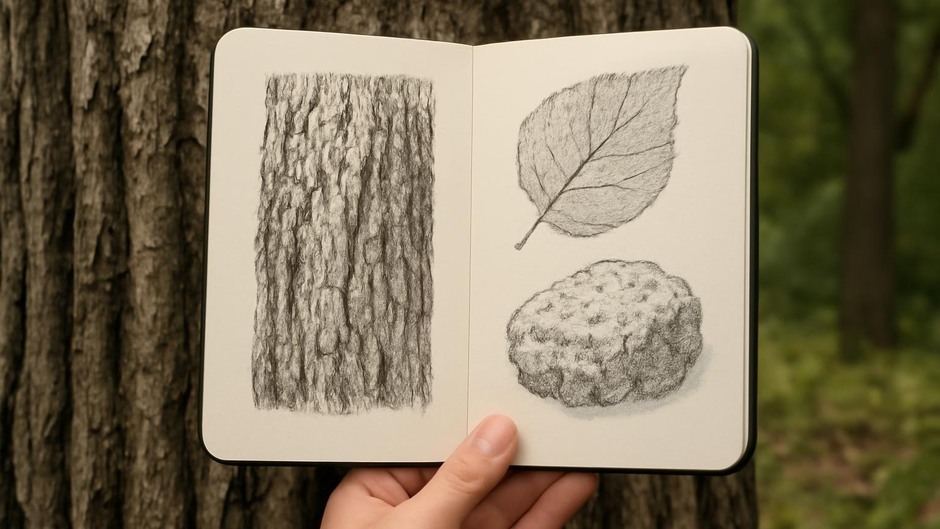
- Damp soil patch: Observe soil texture before and after a light drizzle or near a damp root. Use stippling for dry grain and broader washes for damp cohesion.
- Gloss and matte: Choose two stones or shells, one with a polished surface and one matte. Note where reflections sit and how they affect perceived colour. Draw highlights as simple white shapes within a value study.
Field checklist
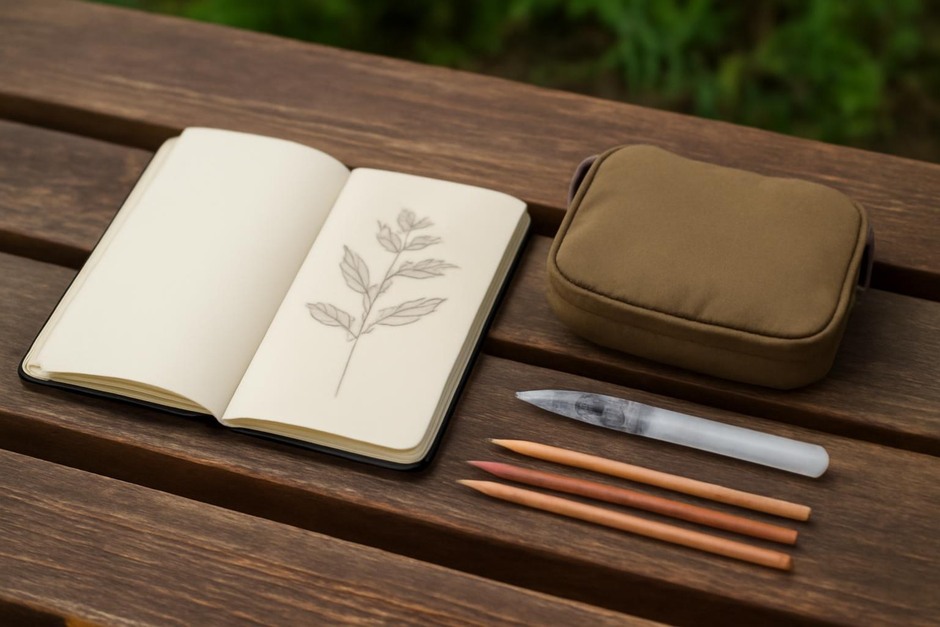
- Paper weight suitable for light washes (at least 140gsm recommended).
- Waterproof bag to protect pages and materials.
- Small sponge or paper towel for blotting and testing.
- Two brushes: one for controlled washes, one for dry texture lifting.
Practical tips for recording moisture
Make brief written notes beside your sketch: time after rain, wind speed, and temperature. This contextual information helps you understand why a texture appeared as it did. When using watercolour, try a tiny test patch to see how pigment behaves on a damp surface versus dry paper.
Reflection prompts
- How did moisture change the most important visual cue for the surface?
- Which mark best conveyed wetness (a wash, a highlight, a darker midtone)?
- What did I learn about controlling washes on damp paper?
- Which observation will I apply to a future composition?
Studying wet and dry textures teaches both observation and material response. By noting how moisture affects value, edge, and colour, you build a practical sense that will inform your field sketches and studio pieces. Keep sessions short and deliberate, and allow the environment to guide the exercise choices.