Observing Autumn Colour: A Seasonal Field Guide
Seeing autumn as a palette
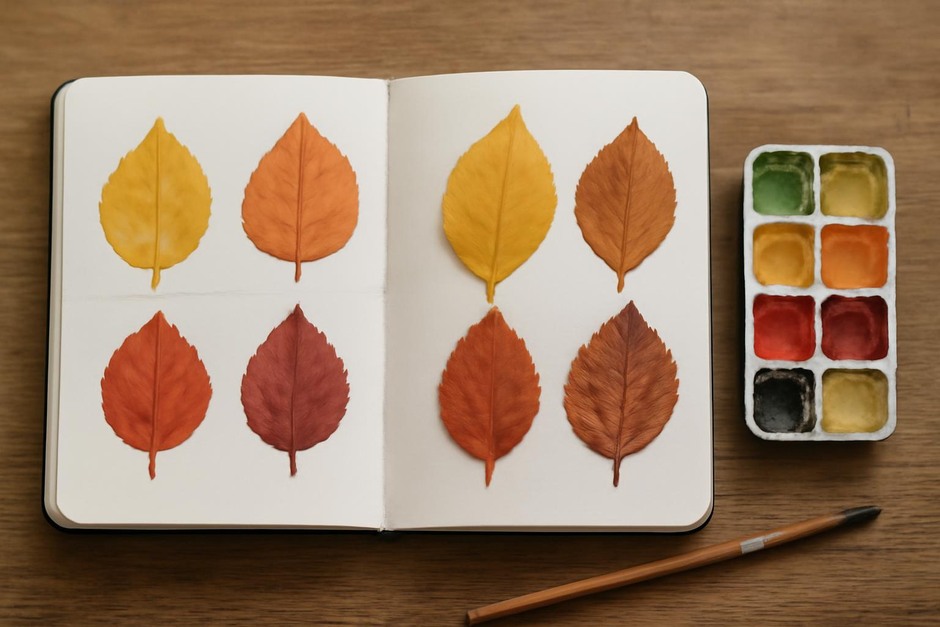
Autumn colours are often described in broad terms—gold, orange, red—but close observation reveals mixed tones: green-yellow transitions, muted russets, and cool shadow blues. Recording these subtleties makes your journals more useful later and trains your eye to recognise seasonal shifts.
Choose a limited palette
Working with a small set of pigments clarifies how hues relate. A simple, versatile palette might include: a warm yellow (like yellow ochre), a cool yellow (lemon or cadmium light), a warm red (venetian or burnt sienna), a cool red (alizarin or quinacridone), and a neutral earth (raw umber). Add a small blue for shadows if desired.
How to make field swatches
- Find representative leaves or areas of colour—do not try to match every leaf on a tree.
- On a spare page, make three small swatches for each area: pure colour, watered-down tint, and the colour mixed with a touch of earth or blue for shadow.
- Label each swatch with a short note: time of day, light quality, temperature, and the nearest colour name you would use at home.
Checklist for an autumn session
- Palette limited to 4–6 colours.
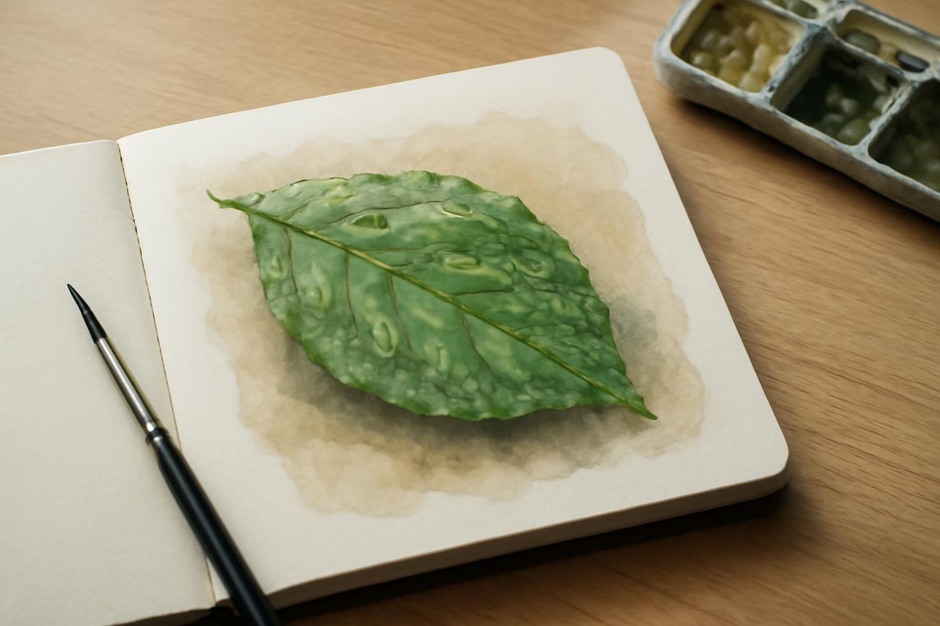
- Paper and a water source ready; test a small wash first.
- Pen for notes and a small sample leaf if you wish to press later.
- Observe one tree, one ground patch, and one sky-to-shadow relationship.
Exercises to build colour memory
Do short timed exercises to strengthen recall.
- Two-minute scan: Close your eyes and name the dominant hue as you remember it. Open and make a quick swatch to compare.
- Five-minute mix: Try to match the swatch by mixing only three colours from your limited set.
- Ten-minute composition note: Make a small, simple sketch indicating the placement of the dominant autumn hues and the main directional light.
Reflection prompts
- Which mixed colour surprised me the most?
- How did shadow colours differ from surface hues?
- Which note will help me recreate this feeling later?
- What small change would I make to my palette next session?
Autumn offers an excellent chance to practise seeing shifts in hue and saturation. The habit of making small swatches and short written notes is more valuable than a perfect painting on the spot. Over time these simple records become a personal reference library of seasonal colour.